

Sourdough Bread (Beginner-Friendly Version)
No fancy bread tools required — and genuinely so doable 💆🏼♀️


Apparently I’m a sourdough person now
I know… we’ve all heard about the sourdough trend. And at this point, the internet is probably a little over it. I’ll admit — I’m very late to it. But now that I’ve actually arrived here, I have to say… it might be one of my favorite “trends” ever.
I got my sourdough starter from my mom (shoutout to her <3), and I’ll link a starter recipe here in case you want to make your own.
For the longest time, I thought sourdough was one of those things that required advanced baking skills & special tools, but honestly, that couldn’t be further from the truth. No banneton basket, no Dutch oven — just a loaf pan, a bubbly starter, and a bit of patience.
Somehow, making bread from scratch has become one of my favorite slower rituals lately. There’s something really grounding about it — especially pulling a warm loaf out of the oven the next morning 🥹
🍞 Why You’ll Love This
Beginner-friendly and low pressure
No fancy sourdough equipment needed
Crispy outside + soft fluffy inside
Makes your kitchen smell unreal

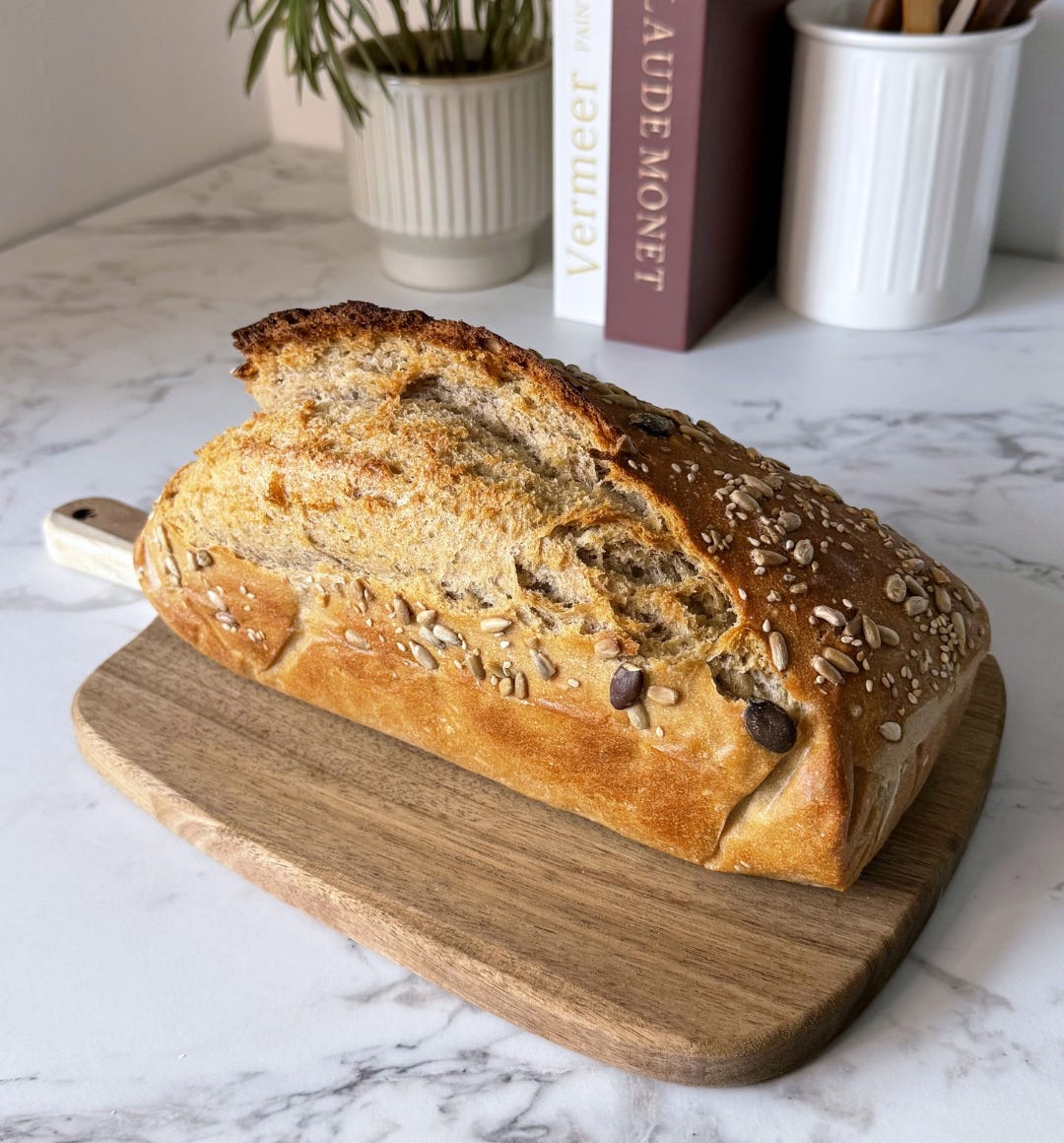
Prep Time: 30 min I Rest Time: 8-24 hours I Bake time: 40-45 min I ~ 10-12 slices
Macros (per slice) : 5g protein / 30g carbs / 2g fat / ~160 kcal
Ingredients
For the starter:
20 g sourdough starter
40 g flour
40 g water
For the dough:
100 g active sourdough starter
300 g spelt flour
100 g rye flour
300 g water
10 g salt
For topping:
1–2 tbsp sunflower seeds
1 tbsp pumpkin seeds
1 tbsp sesame seeds
Instructions:
1. Feed Your Starter:
In the morning, mix the sourdough starter, flour, and water in a jar until smooth.
Cover loosely and let it sit at room temperature until it becomes bubbly, fluffy, and roughly doubles in size. Depending on your kitchen temperature, this can take several hours.
2. Mix The Dough:
In a large bowl, combine the flour and water until no dry flour remains.
Let the mixture rest for 30 minutes. This helps hydrate the flour and makes the dough easier to work with later.
After resting, add the active starter and salt. Mix everything together well. The dough will feel sticky at first — completely normal.
3. Stretch & Fold:
Over the next 2 hours, do a round of stretch and folds every 30 minutes.
To do this, wet your hands slightly, pull one side of the dough upward, and fold it over itself. Rotate the bowl and repeat a few times.
After each round, the dough should start feeling smoother and stronger.
4. Let The Dough Rise:
Once your folds are done, leave the dough covered at room temperature until it looks puffier and slightly airy.
The total rise time from the beginning of the dough is usually around 3–4 hours for me, but this can vary depending on temperature.
5. Shape The Dough:
Transfer the dough onto a floured surface and shape it gently into a loaf shape.
Place it into a greased or parchment-lined loaf pan. Top with sunflower seeds, pumpkin seeds, and sesame seeds.
6. Rest Overnight
For the best flavor and texture, place the loaf in the fridge overnight (anywhere from 8–24 hours).
If you want to bake it the same day, let it rest at room temperature for another 30–60 minutes instead.
7. Bake:
Preheat your oven to 230°C / 445°F.
Place a small dish of water at the bottom of the oven to create steam.
Bake the bread for:
15 minutes at 230°C / 445°F
then remove the dish and reduce the heat to 200°C / 390°F
bake another 25–30 minutes
The loaf should be deeply golden on top.
Let it cool before slicing if you can wait😌


Tips & Notes
Your starter doesn’t have to look perfect — bubbles and some rise are enough.
If your kitchen is cold, fermentation may take longer.
The dough is supposed to feel sticky, especially at the beginning.
Overnight fridge fermentation gives the bread a deeper flavor and better texture.
Store leftovers wrapped in a kitchen towel or airtight container for 2–3 days.
Substitutions & Variations
Swap spelt flour for bread flour if preferred.
Add chopped walnuts or olives to the dough.
Use only sesame seeds on top for a simpler version.
Add flaky salt on top before baking for extra flavor.
You can replace rye flour with whole wheat flour if needed.
Let me know if you give it a go — and tag me if you share it! I’m obsessed with seeing your recreations 👀
xx Pati 🧡